GHRH analogue
Tesamorelin: the research picture
A stabilised GHRH analogue, upstream of the growth-hormone axis.
What is Tesamorelin?
Tesamorelin is a synthetic analogue of human growth-hormone-releasing hormone (GHRH), specifically of the biologically active GHRH(1–44) sequence, modified with a trans-3-hexenoyl group at the N-terminus. That modification is the point of the molecule: native GHRH is rapidly cleaved by dipeptidyl peptidase-4, and the N-terminal acylation confers resistance to that degradation.
Its position in the endocrine cascade is what distinguishes it from growth-hormone secretagogues like ipamorelin. Tesamorelin acts at the GHRH receptor on pituitary somatotrophs, the same receptor the hypothalamus uses. That means it works upstream, through the physiological release mechanism, and remains subject to the negative-feedback loops (somatostatin, IGF-1) that regulate the axis.
The published human literature is unusually well defined for a research peptide, centring on studies of visceral adipose tissue in HIV-associated lipodystrophy, where it has been examined in randomised controlled trials with imaging endpoints. That gives laboratory work a rigorous public reference.
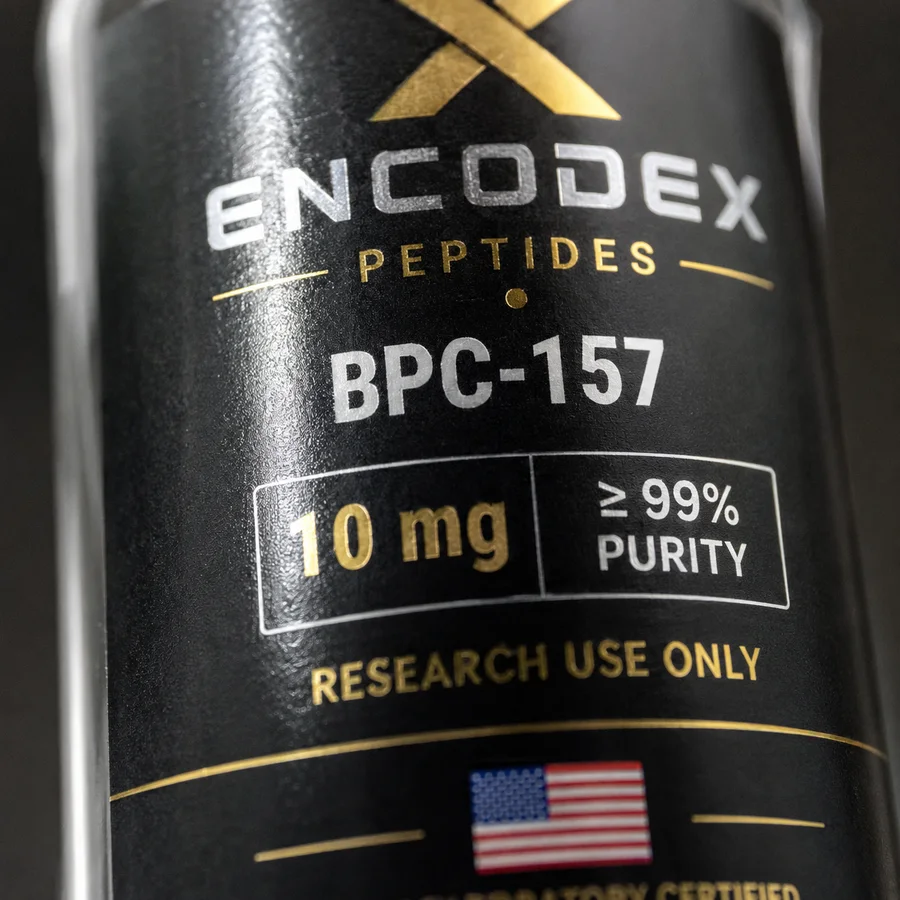
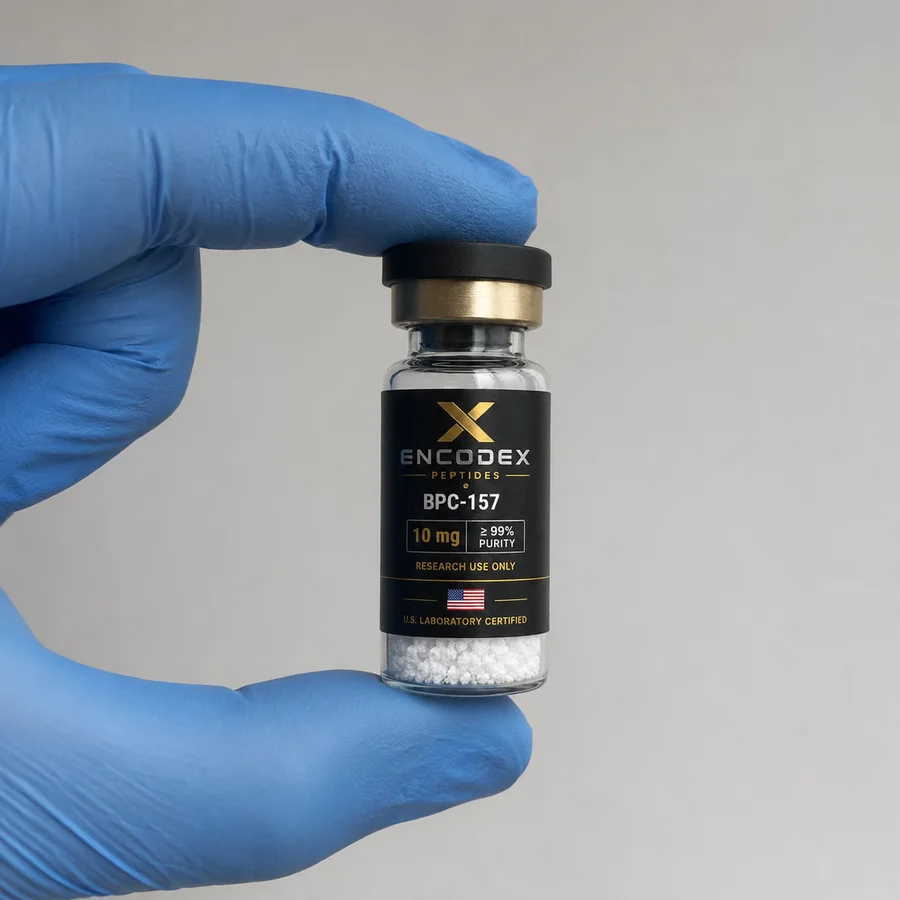
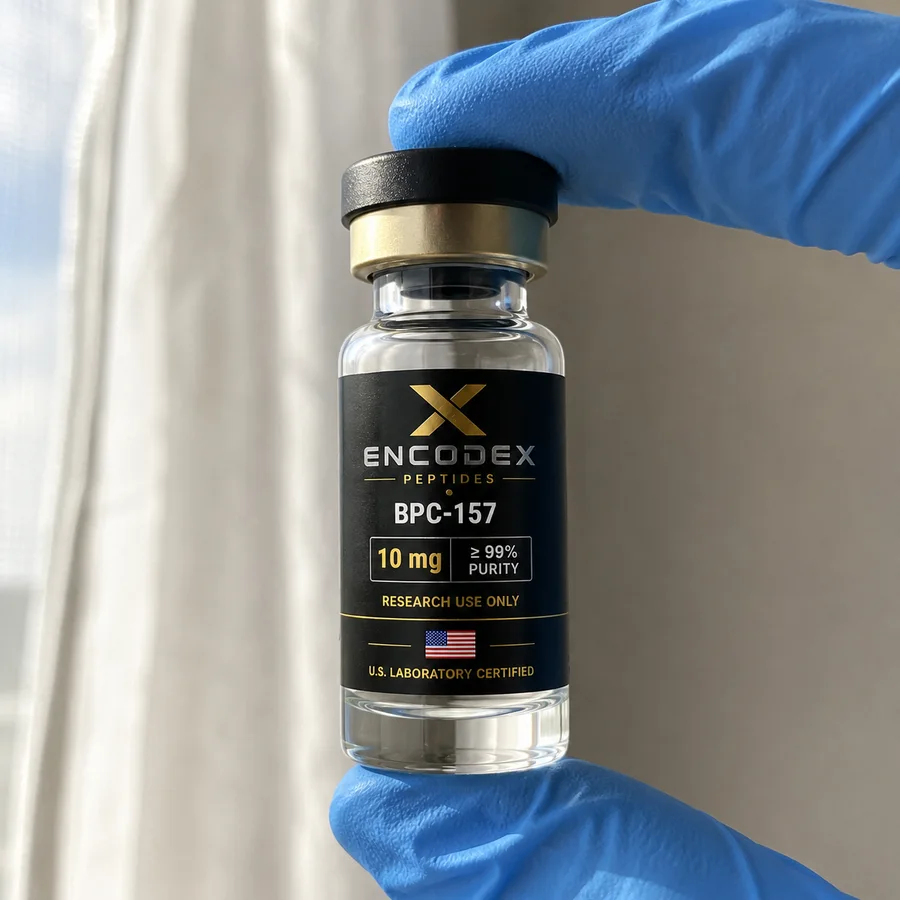
Supplied lyophilised, independently assayed to ≥99% purity, with a per-lot certificate of analysis. Research use only.
Why it's studied
Physiological, feedback-preserving stimulation
Because tesamorelin acts at the GHRH receptor rather than bypassing the axis, model systems retain their endogenous feedback regulation, a meaningfully different experimental condition from exogenous growth hormone.
DPP-4 resistance
The N-terminal trans-3-hexenoyl modification blocks the cleavage that destroys native GHRH, making a stable, usable research tool out of an otherwise ephemeral hormone.
Visceral versus subcutaneous adipose
The published trials used imaging to distinguish visceral from subcutaneous fat compartments, which is why this compound features specifically in research on compartment-selective adipose questions.
Clean comparator for secretagogues
Running tesamorelin against a ghrelin-receptor secretagogue such as ipamorelin isolates the two distinct routes into the GH axis.
How Tesamorelin is understood to work
GHRH receptor agonism
Binds the GHRH receptor on pituitary somatotrophs, a class-B GPCR, driving cyclic-AMP-mediated synthesis and pulsatile release of growth hormone.
Preserved pulsatility
Because release goes through the pituitary's own machinery, the resulting GH profile is pulsatile rather than the flat exposure of administered growth hormone, a distinction the literature treats as physiologically important.
IGF-1 axis
Growth hormone drives hepatic IGF-1 production, and IGF-1 in turn feeds back to suppress GH release. Studies in this area typically track both to characterise the full axis response rather than GH alone.
DPP-4 resistance
The hexenoyl modification at the N-terminus prevents dipeptidyl peptidase-4 cleavage, which is what extends the molecule's usable duration relative to native GHRH.
Mechanistic descriptions summarise published laboratory research. They describe what the literature investigates, not effects in humans, and not guidance of any kind.
Storing and reconstituting Tesamorelin
Storage before reconstitution
Lyophilised vials at 2–8 °C, sealed and protected from light. Tesamorelin is among the more temperature-sensitive peptides in the catalogue, keep the cold chain tight.
Reconstitution
Bacteriostatic water, added slowly down the vial wall and dissolved with gentle swirling. Do not shake.
After reconstitution
Refrigerate at 2–8 °C, protected from light, and prepare volumes matched to the experiment. GHRH analogues in solution are less stable than the lyophilised powder.
Timing in study design
GH release is naturally pulsatile and follows a circadian pattern, so protocols in this area generally standardise administration time, otherwise the endogenous rhythm confounds the measurement.
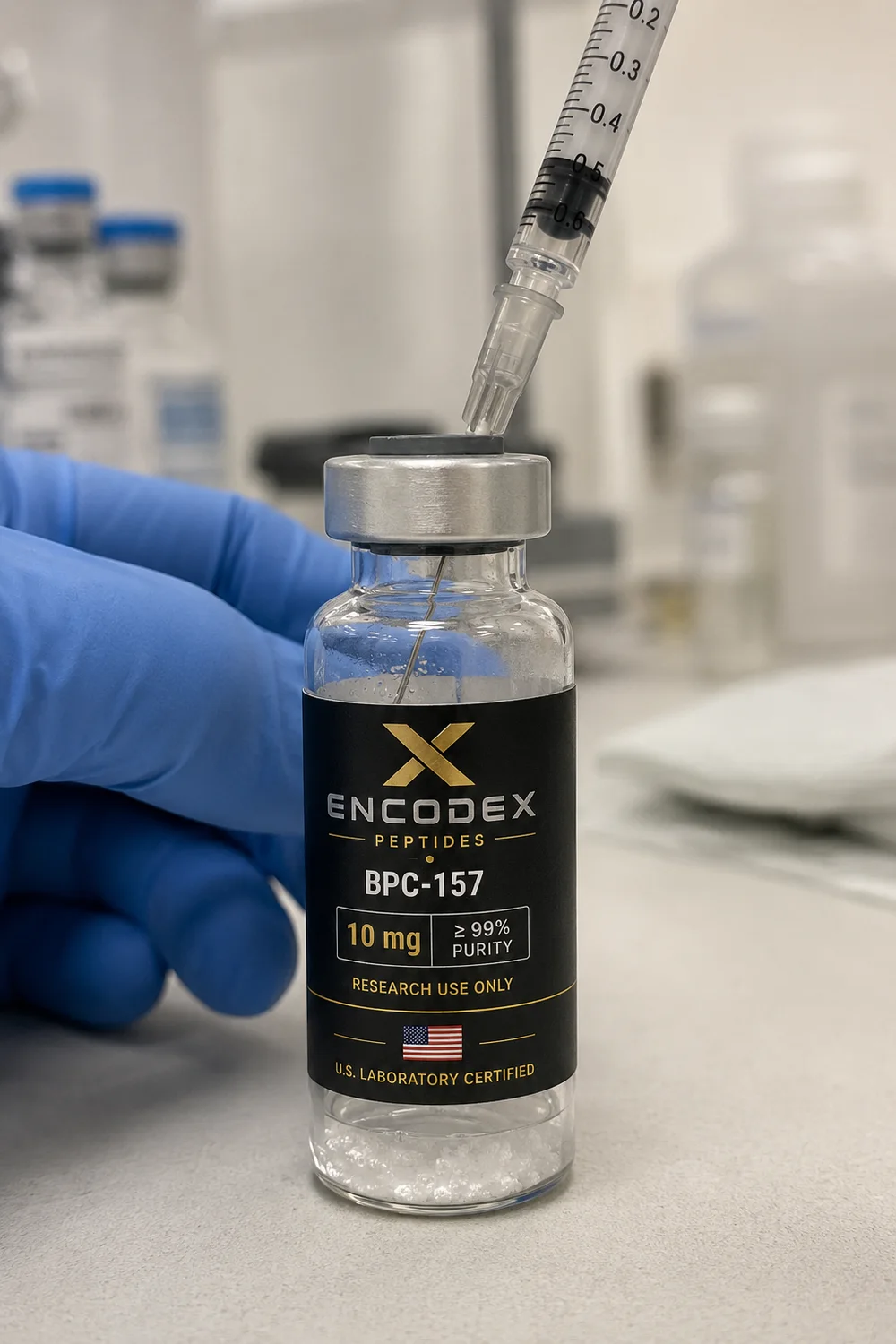
Laboratory handling guidance only. This describes standard practice for storing and preparing research reagents. It is not dosing guidance and carries no implication of human or veterinary use.
The Tesamorelin molecule
Identifiers cross-checked against reference databases before publication. Where a value could not be verified from two independent sources, it is left out rather than estimated.
- Y 1 · Tyrosine · hexenoyl
- A 2 · Alanine
- D 3 · Aspartic acid
- A 4 · Alanine
- I 5 · Isoleucine
- F 6 · Phenylalanine
- T 7 · Threonine
- N 8 · Asparagine
- S 9 · Serine
- Y 10 · Tyrosine
- R 11 · Arginine
- K 12 · Lysine
- V 13 · Valine
- L 14 · Leucine
- G 15 · Glycine
- Q 16 · Glutamine
- L 17 · Leucine
- S 18 · Serine
- A 19 · Alanine
- R 20 · Arginine
- K 21 · Lysine
- L 22 · Leucine
- L 23 · Leucine
- Q 24 · Glutamine
- D 25 · Aspartic acid
- I 26 · Isoleucine
- M 27 · Methionine
- S 28 · Serine
- R 29 · Arginine
- Q 30 · Glutamine
- Q 31 · Glutamine
- G 32 · Glycine
- E 33 · Glutamic acid
- S 34 · Serine
- N 35 · Asparagine
- Q 36 · Glutamine
- E 37 · Glutamic acid
- R 38 · Arginine
- G 39 · Glycine
- A 40 · Alanine
- R 41 · Arginine
- A 42 · Alanine
- R 43 · Arginine
- L 44 · Leucine · C-term NH₂
Documented modifications
- 1 hexenoyl
- A trans-3-hexenoyl group on the N-terminus, protecting the chain from rapid enzymatic clearance.
- 44 C-term NH₂
- The chain ends in an amide rather than a free acid, a common stabilising choice.
Sequence notes
Human GHRH residues 1 to 44, carrying an N-terminal trans-3-hexenoyl group on Tyr1 and an amidated C-terminus.
Identifiers
- CAS number
- 218949-48-5
- Molecular formula
- C221H366N72O67S
- Molecular weight
- 5135.9 g/mol
- Amino acid count
- 44
- Also known as
- TH9507 · hexenoyl-hGRF(1-44)
Free base. Supplied as the acetate salt.
Sources: PubChem, DrugBank, ChEBI, UniProt and regulatory product labels.
How Tesamorelin compares
The class comparison has its own article, written to be read on its own.
Selected published research
A starting point for the peer-reviewed literature, not a complete bibliography. Search any citation by title in PubMed or your institution's library to read the source.
- 01
Falutz J, et al., Metabolic effects of a growth hormone-releasing factor in patients with HIV
New England Journal of Medicine, 2007
The randomised trial that established the compound's visceral adipose endpoint profile.
- 02
Stanley TL, et al., Effect of tesamorelin on visceral fat and liver fat in HIV-infected patients with abdominal fat accumulation
JAMA, 2014
Randomised trial with imaging endpoints for both visceral and hepatic fat.
- 03
Falutz J, et al., Long-term safety and effects of tesamorelin, a growth hormone-releasing factor analogue
AIDS, 2008
Extension study reporting longer-duration data.
Citations are provided for scientific context. We are not affiliated with the authors, institutions or journals listed, and their publication implies no endorsement of this supplier or of any use of these compounds outside a laboratory.
Research questions about Tesamorelin
What is tesamorelin?
A synthetic, DPP-4-resistant analogue of growth-hormone-releasing hormone, modified with an N-terminal trans-3-hexenoyl group. Studied in GH-axis and metabolic research; supplied for laboratory use only.
How does tesamorelin differ from ipamorelin?
Different receptors. Tesamorelin acts at the GHRH receptor, the hypothalamic route. Ipamorelin acts at the ghrelin receptor (GHSR-1a) as a growth-hormone secretagogue. They enter the same axis at different points, which is why they are often studied together.
How is it different from administering growth hormone directly?
Tesamorelin stimulates the pituitary to release its own GH, so pulsatility and negative feedback are preserved. Exogenous GH bypasses both. In research terms these are quite different experimental conditions.
What purity is your tesamorelin?
Independently assayed by HPLC and mass spectrometry, released at ≥99%, with the certificate matched to your lot number.
How should tesamorelin be stored?
Lyophilised at 2–8 °C protected from light. This one is particularly temperature-sensitive. Reconstituted solution refrigerated and used within a short window.
Is tesamorelin approved for human use?
It exists as an approved medicine in some jurisdictions for a specific indication, but what we supply is not a pharmaceutical preparation. It is a research chemical for laboratory use only, not for human or veterinary use.
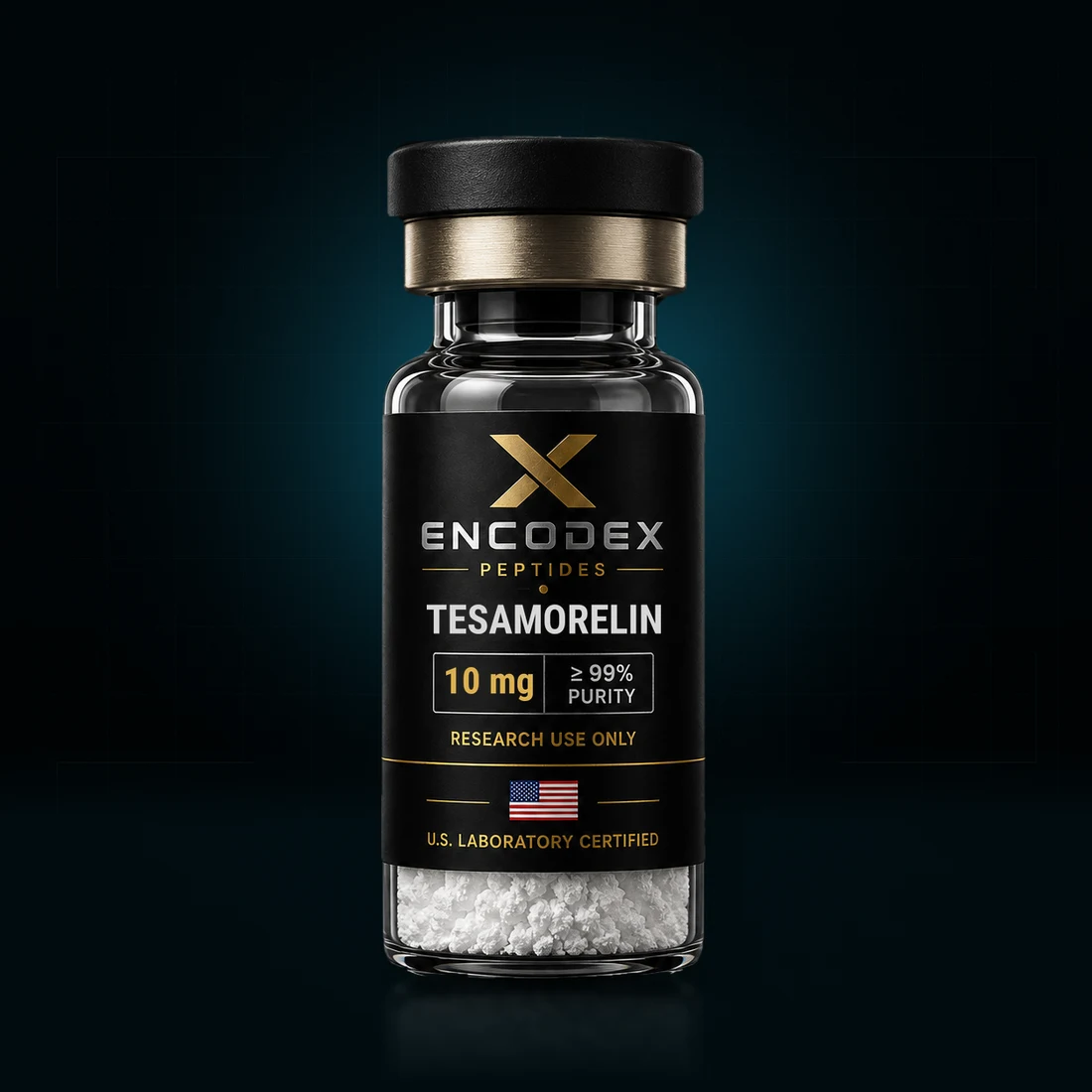
Source Tesamorelin for your laboratory
Assayed at ≥99% purity, with the batch record published on the product page.