Thymosin β-4 fragment
TB-500: the research picture
The actin-binding fragment: cell motility research, distilled.
What is TB-500?
TB-500 is a synthetic peptide corresponding to the active region of thymosin β4, a 43-amino-acid protein present in essentially all mammalian cells and one of the most abundant intracellular peptides known. Thymosin β4's principal known function is actin sequestration: it binds monomeric G-actin and regulates the pool available for polymerisation into filamentous F-actin, the cytoskeletal machinery that drives cell shape change and movement.
The commercially studied fragment isolates the actin-binding region rather than reproducing the full protein. That is deliberate, the shorter sequence retains the actin interaction that most repair-model research is interested in, while being far cheaper and more practical to synthesise at scale than the full 43-residue protein.
Research interest centres on cell migration. Because actin dynamics underlie how cells crawl, anything that shifts the G-actin/F-actin equilibrium is a lever on motility, and motility is the rate-limiting step in most in-vitro repair models. The published literature spans dermal, corneal, cardiac and vascular models.
Supplied lyophilised, independently assayed to ≥99% purity by HPLC and mass spectrometry, with a per-lot certificate of analysis. Research use only.
Why it's studied
A direct handle on actin dynamics
Few research peptides act on a mechanism as fundamental and as well characterised as G-actin sequestration. That makes TB-500 a comparatively interpretable tool in migration assays.
Complements BPC-157
The two are frequently studied side by side because their proposed mechanisms are different, actin regulation versus angiogenic and growth-factor signalling, which makes them useful for separating motility effects from vascular ones.
Broad model coverage
Thymosin β4 has published work across dermal, corneal, cardiac and vascular models, giving the fragment a wide base of comparative literature.
Well-defined parent protein
Unlike compounds with an unclear provenance, TB-500 derives from a protein whose structure, abundance and primary function are established biochemistry rather than open questions.
How TB-500 is understood to work
G-actin sequestration
Thymosin β4 binds monomeric actin in a 1:1 complex, holding it out of the polymerisation pool. Shifting that equilibrium changes how readily a cell can build and dismantle the filament networks it uses to move.
Cell migration
In-vitro scratch and transwell assays across several cell types report increased migration, consistent with the actin mechanism, the most-reproduced readout in the fragment's literature.
Angiogenesis models
Endothelial work reports effects on tubule formation and migration, connecting the actin mechanism to vascular model outcomes.
Downstream signalling
Published cardiac work describes activation of integrin-linked kinase and Akt signalling as a proposed route from actin binding to survival and migration outcomes in model systems.
Mechanistic descriptions summarise published laboratory research. They describe what the literature investigates, not effects in humans, and not guidance of any kind.
Storing and reconstituting TB-500
Storage before reconstitution
Lyophilised at 2–8 °C, sealed and protected from light.
Reconstitution
Bacteriostatic water, added slowly against the vial wall and dissolved by gentle swirling. Avoid vigorous agitation.
After reconstitution
Refrigerate at 2–8 °C, protect from light, and prepare volumes matched to the experiment rather than storing solution long term.
Blend context
TB-500 is also a component of our KLOW blend (with KPV, GHK-Cu and BPC-157) for protocols calling for the combination from a single vial.
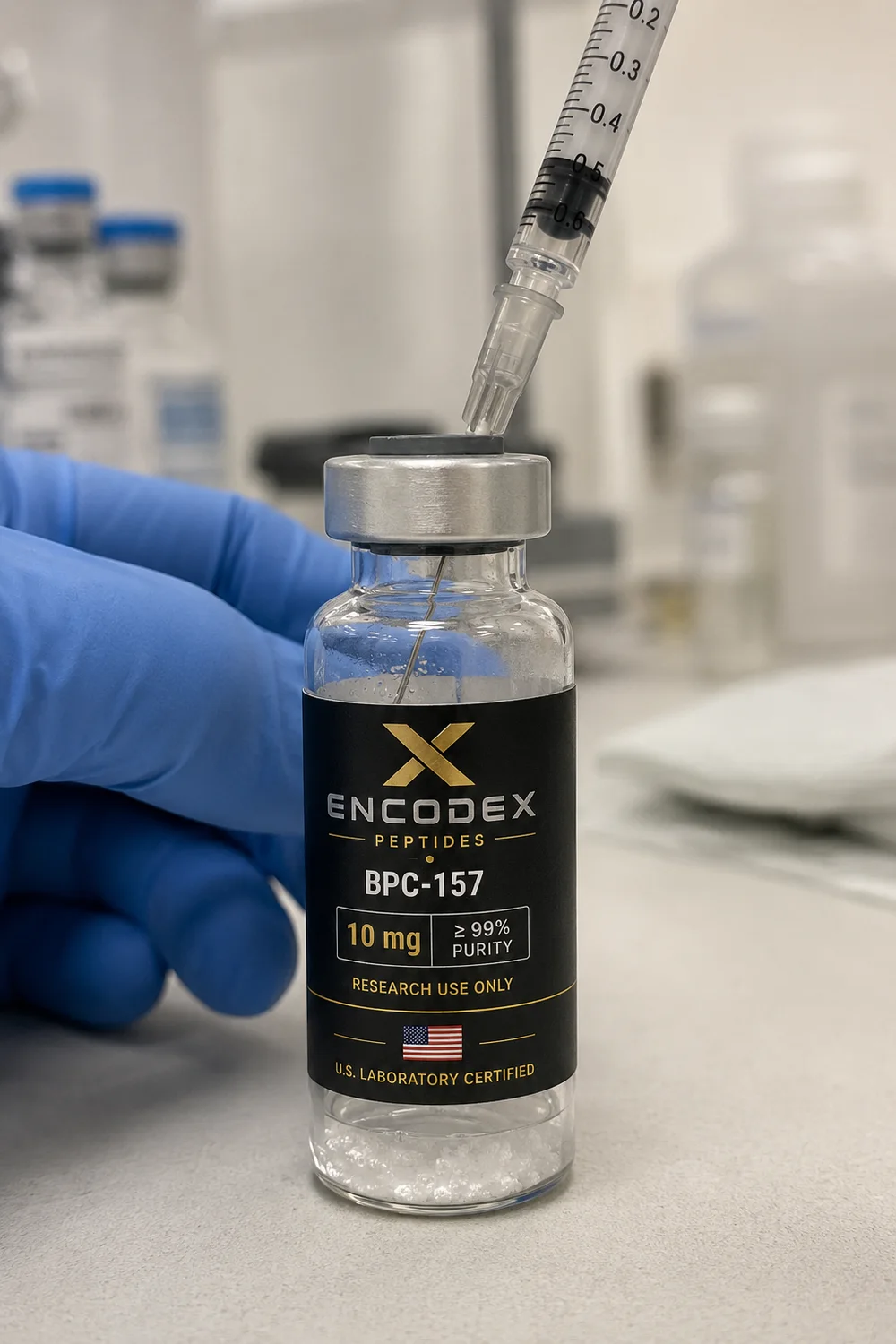
Laboratory handling guidance only. This describes standard practice for storing and preparing research reagents. It is not dosing guidance and carries no implication of human or veterinary use.
The TB-500 molecule
Identifiers cross-checked against reference databases before publication. Where a value could not be verified from two independent sources, it is left out rather than estimated.
- L 1 · Leucine · N-acetyl
- K 2 · Lysine
- K 3 · Lysine
- T 4 · Threonine
- E 5 · Glutamic acid
- T 6 · Threonine
- Q 7 · Glutamine
Documented modifications
- 1 N-acetyl
- An acetyl cap on the N-terminus, blocking degradation from that end.
Sequence notes
N-terminally acetylated (Ac-LKKTETQ), free C-terminal acid. This is residues 17 to 23 of thymosin beta-4, not the full-length 43-residue protein that is sometimes sold under the same name.
Identifiers
- CAS number
- 885340-08-9
- Molecular formula
- C38H68N10O14
- Molecular weight
- 889.02 g/mol
- Amino acid count
- 7
- Also known as
- Ac-LKKTETQ · Thymosin β-4 (17-23)
Sources: PubChem, DrugBank, ChEBI, UniProt and regulatory product labels.
How TB-500 compares
The class comparison has its own article, written to be read on its own.
Selected published research
A starting point for the peer-reviewed literature, not a complete bibliography. Search any citation by title in PubMed or your institution's library to read the source.
- 01
Goldstein AL, Hannappel E, Kleinman HK, Thymosin β4: actin-sequestering protein moonlights to repair injured tissues
Trends in Molecular Medicine, 2005
The standard overview connecting the actin mechanism to repair-model observations.
- 02
Malinda KM, et al., Thymosin β4 accelerates wound healing
Journal of Investigative Dermatology, 1999
An early and widely cited dermal model study.
- 03
Bock-Marquette I, et al., Thymosin β4 activates integrin-linked kinase and promotes cardiac cell migration, survival and cardiac repair
Nature, 2004
Proposes the ILK/Akt signalling route downstream of actin binding.
- 04
Philp D, Kleinman HK, Animal studies with thymosin β4, a multifunctional tissue repair and regeneration peptide
Annals of the New York Academy of Sciences, 2010
Review of model-system work across tissue types.
Citations are provided for scientific context. We are not affiliated with the authors, institutions or journals listed, and their publication implies no endorsement of this supplier or of any use of these compounds outside a laboratory.
Research questions about TB-500
What is TB-500?
A synthetic peptide corresponding to the active, actin-binding region of thymosin β4. Studied in cell-migration and tissue-repair models; supplied for laboratory research use only.
Is TB-500 the same as thymosin β4?
No. Thymosin β4 is the full 43-amino-acid protein; TB-500 is a shorter synthetic fragment covering the actin-binding region, which is what most repair-model research is concerned with.
How does TB-500 differ from BPC-157?
Different mechanisms. TB-500 acts through actin sequestration and cell motility; BPC-157 is studied via angiogenic signalling and growth-factor receptor modulation. Researchers often run them in parallel for exactly that reason.
What purity is your TB-500?
Independently assayed by HPLC and mass spectrometry, released at ≥99%, with the certificate tied to your vial's lot number.
How should it be stored?
Lyophilised vials at 2–8 °C protected from light; reconstituted solution refrigerated and used within a short window.
Is TB-500 approved for human use?
No. It is a research chemical supplied for laboratory use only, not for human or veterinary use.
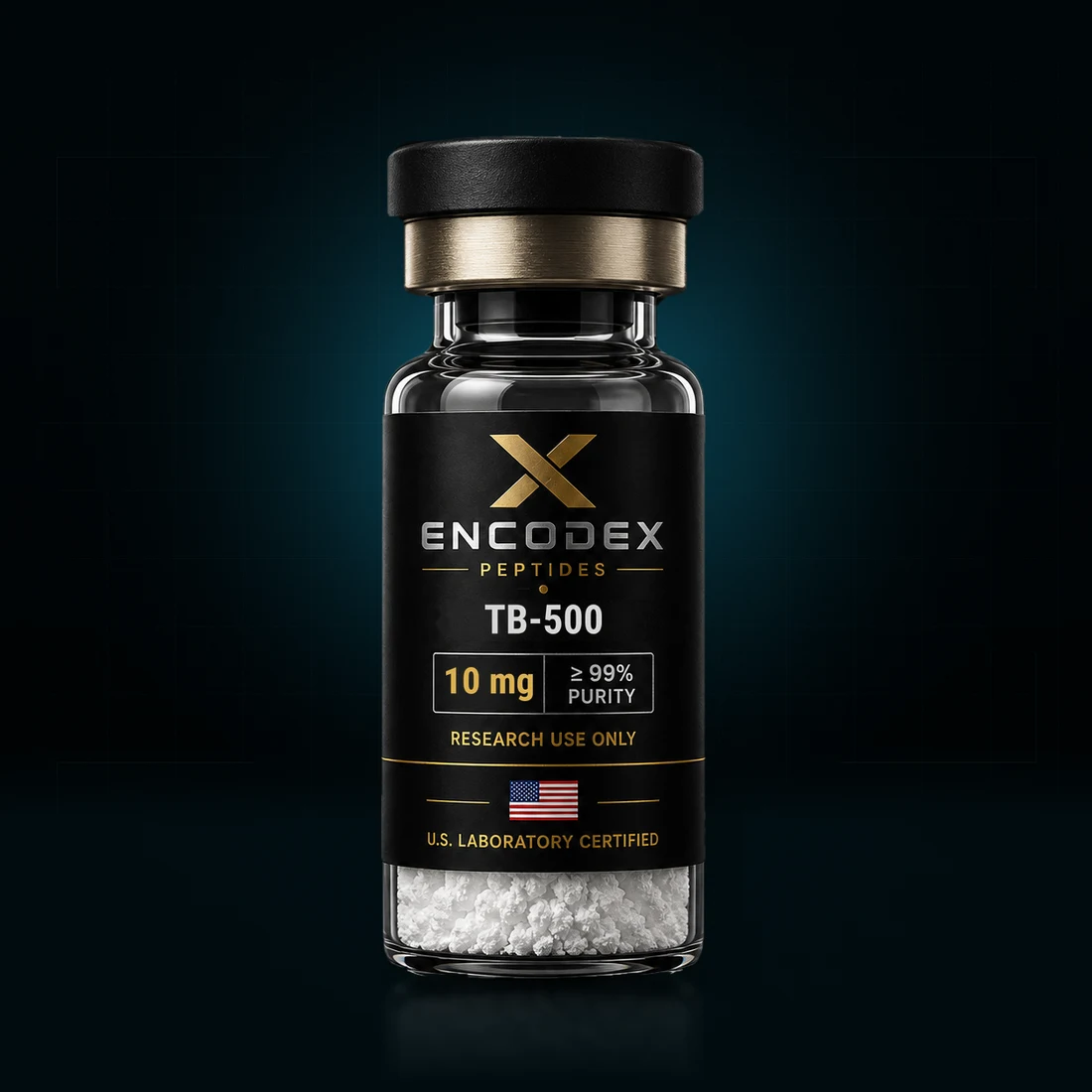
Source TB-500 for your laboratory
Assayed at ≥99% purity, with the batch record published on the product page.