GIP / GLP-1 / glucagon tri-agonist
Retatrutide: the research picture
The triple-receptor agonist: three metabolic pathways, one molecule.
What is Retatrutide?
Retatrutide (development code LY3437943) is a synthetic 39-amino-acid peptide engineered to act on three metabolic receptors at once: the glucose-dependent insulinotropic polypeptide (GIP) receptor, the glucagon-like peptide-1 (GLP-1) receptor, and the glucagon receptor. That third arm is what separates it from every incretin compound that came before it: single agonists like semaglutide engage GLP-1 alone, and dual agonists like tirzepatide add GIP, but retatrutide is the first widely studied molecule to bring glucagon-receptor signalling into the same backbone.
Structurally it is built on a modified GIP peptide scaffold carrying a C20 fatty-diacid moiety. That lipidation drives reversible albumin binding, which is the design trick behind its long circulating half-life, roughly six days in published human pharmacokinetic work, consistent with a once-weekly research dosing interval in the trials that have reported it.
In the laboratory it has become a reference compound for studying how simultaneous incretin and glucagon signalling interact. Because the three receptors sit on different tissues and push in partly opposing directions, GLP-1 and GIP broadly on insulin secretion and satiety pathways, glucagon classically on hepatic glucose output and energy expenditure, retatrutide gives researchers a single tool for probing the net effect of combined agonism rather than reconstructing it from separate molecules.
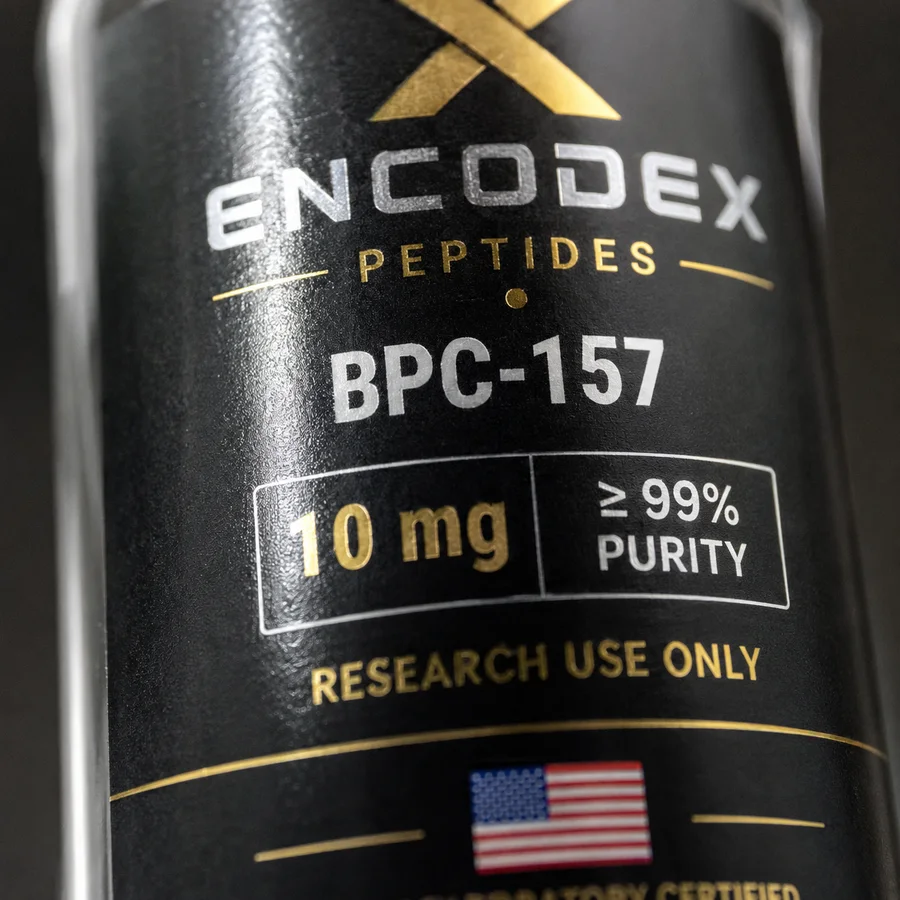
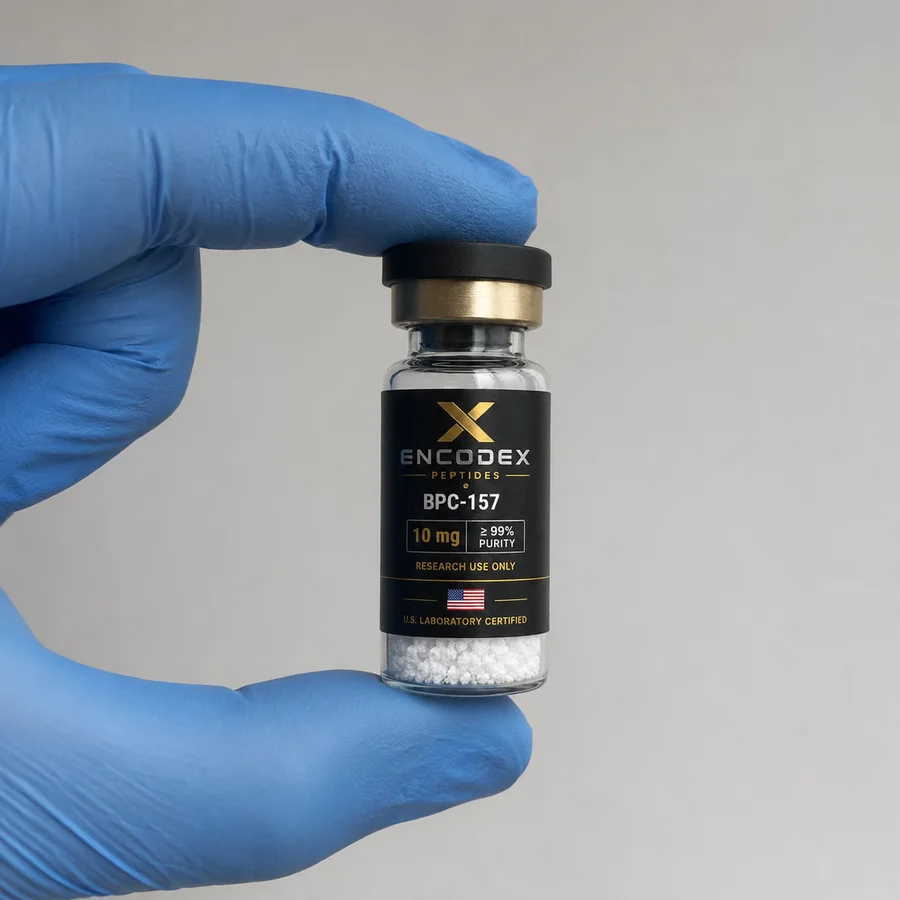
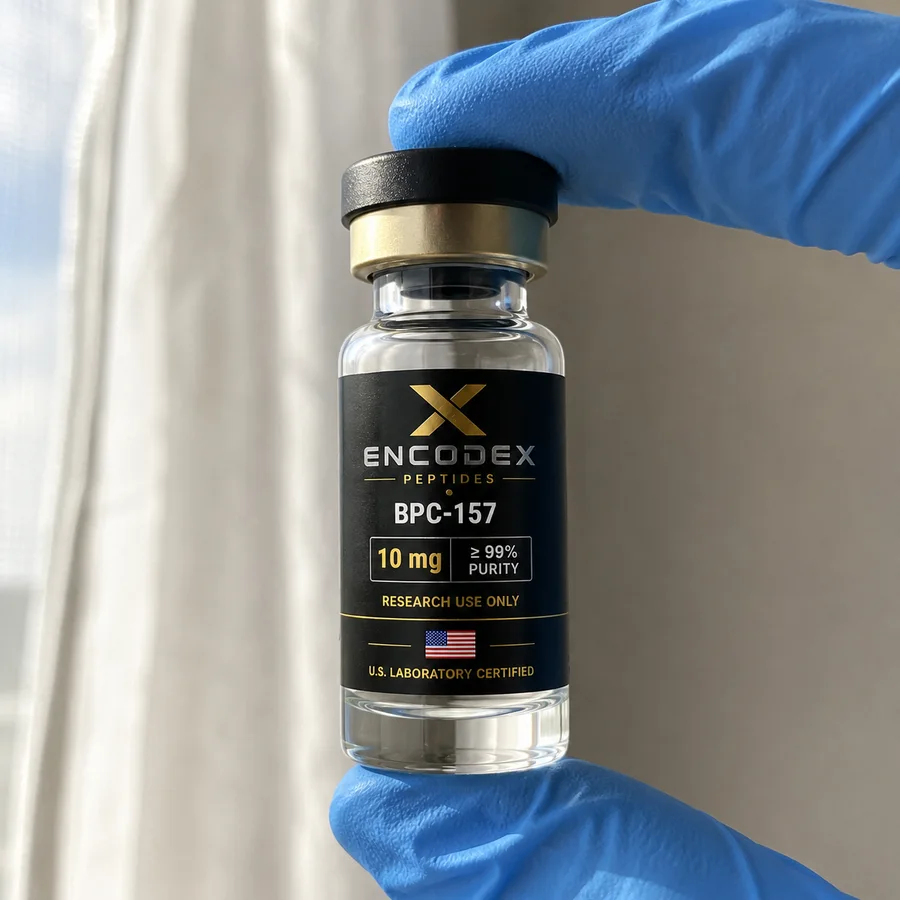
Our retatrutide is supplied lyophilised, third-party assayed by HPLC and mass spectrometry to ≥99% purity, and shipped with a certificate of analysis tied to the lot number printed on the vial. It is sold strictly as a research chemical, for in-vitro and laboratory-model work by qualified researchers.
Why it's studied
Three receptors, one variable
Studying combined incretin signalling normally means co-administering two or three molecules, each with its own pharmacokinetics, which makes it very hard to attribute an observed effect to the combination rather than to a timing artefact. A single tri-agonist collapses that into one variable with one exposure curve.
The glucagon arm is the open question
GLP-1 and GIP agonism are comparatively well mapped. Glucagon-receptor agonism is the newer and more contested addition: the literature investigates it in relation to hepatic glucose handling, lipid metabolism and energy expenditure, and the interaction with the incretin arms is exactly what current research is trying to characterise.
Well-documented phase 2 dataset
Unlike many compounds circulating in the research market, retatrutide has peer-reviewed phase 2 data published in major journals (see the literature section below). That gives laboratory work a public reference point for pharmacokinetics, exposure ranges and observed metabolic endpoints.
Long half-life, stable exposure
The fatty-diacid albumin-binding design produces a multi-day half-life, so plasma concentration in model systems stays comparatively flat between administrations. For study design that means fewer confounds from peak-trough swings than short-acting peptides introduce.
How Retatrutide is understood to work
GLP-1 receptor
A class-B G-protein-coupled receptor expressed on pancreatic beta cells, in the gastrointestinal tract and in regions of the central nervous system. Agonism is studied for glucose-dependent insulin secretion, gastric emptying rate and central satiety signalling.
GIP receptor
The second incretin receptor, expressed on beta cells and on adipose tissue. Its role is more debated than GLP-1: research examines both insulinotropic effects and adipose-tissue actions, and the field has not settled whether GIP agonism or antagonism is the more productive direction, which is precisely why a tri-agonist tool is useful.
Glucagon receptor
Principally hepatic. Glucagon-receptor signalling is classically associated with glycogenolysis and gluconeogenesis, and in the context of combined agonism it is investigated for effects on hepatic lipid content and total energy expenditure, with the incretin arms studied as a counterweight to the glucose-raising tendency of glucagon alone.
Albumin binding and duration
The C20 fatty-diacid side chain binds serum albumin reversibly, creating a circulating depot that slows renal clearance. This is the same half-life-extension strategy used across the modern incretin class, and it is what makes weekly rather than daily exposure intervals feasible in study protocols.
Mechanistic descriptions summarise published laboratory research. They describe what the literature investigates, not effects in humans, and not guidance of any kind.
Storing and reconstituting Retatrutide
Storage before reconstitution
Lyophilised retatrutide is shipped cold and should be kept at 2–8 °C in the sealed vial, protected from light. In the dry state the peptide is comparatively stable; brief ambient excursions during transit are expected and accounted for in our cold-chain packing.
Reconstitution
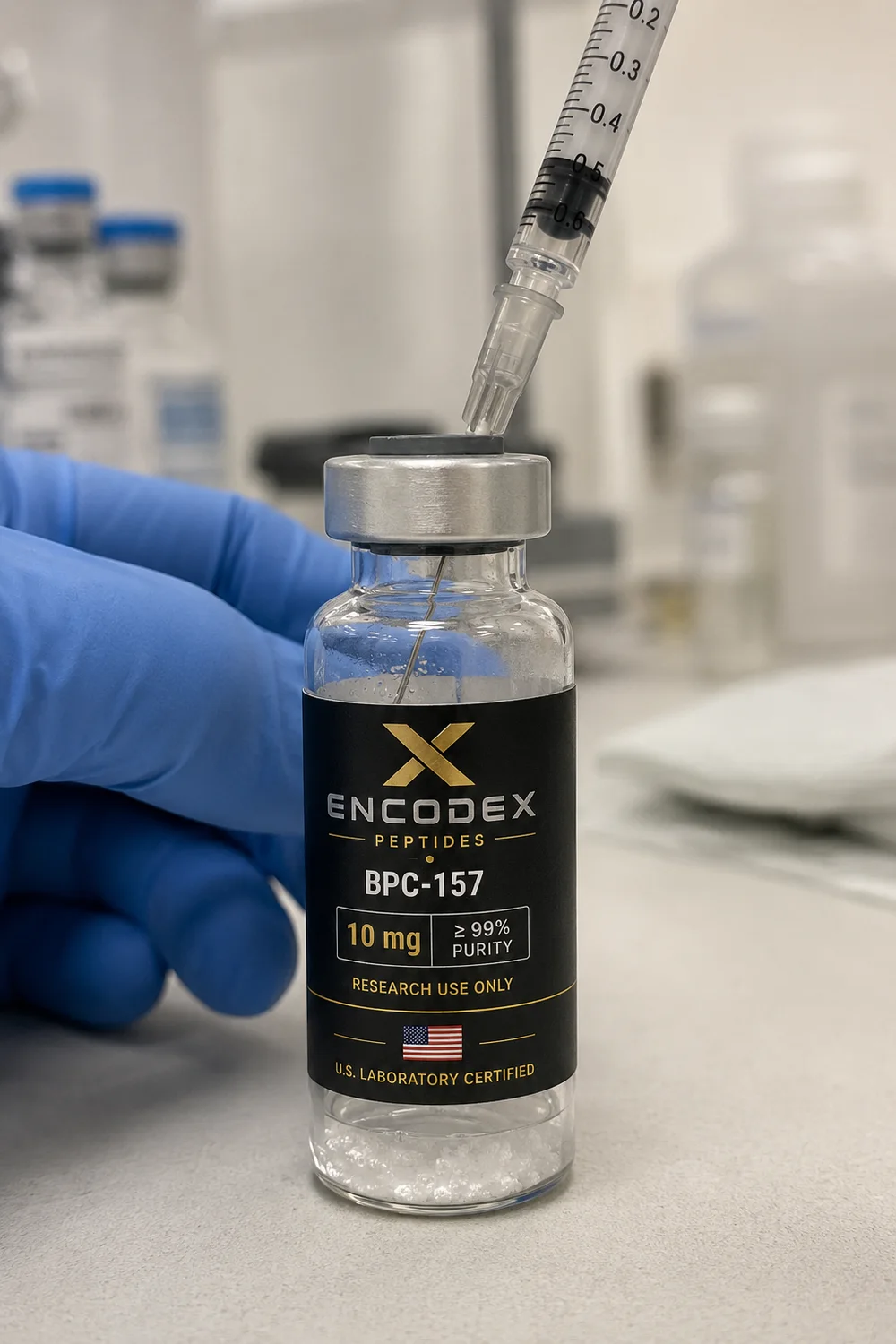
Reconstitution in laboratory work is typically performed with bacteriostatic water, added slowly against the vial wall rather than directly onto the powder cake, and dissolved by gentle swirling. Peptides of this class are sensitive to shear, vortexing or vigorous shaking is generally avoided in published handling protocols.
After reconstitution
Solutions are kept refrigerated at 2–8 °C and protected from light. Freeze-thaw cycling is avoided where possible, as repeated cycles are a known source of aggregation and potency loss in lipidated peptides. Record the reconstitution date against the lot number for traceability.
Concentration arithmetic
Working concentration is simply vial content divided by solvent volume, a 10 mg vial reconstituted with 2 mL gives 5 mg/mL. Our dilution calculator will do this arithmetic for you, including the per-unit figure for graduated laboratory syringes.
Laboratory handling guidance only. This describes standard practice for storing and preparing research reagents. It is not dosing guidance and carries no implication of human or veterinary use.
The Retatrutide molecule
Identifiers cross-checked against reference databases before publication. Where a value could not be verified from two independent sources, it is left out rather than estimated.
- · 1
- · 2 · Aib
- · 3
- · 4
- · 5
- · 6
- · 7
- · 8
- · 9
- · 10
- · 11
- · 12
- · 13 · 2-Me-Leu
- · 14
- · 15
- · 16
- · 17 · C20 diacid
- · 18
- · 19
- · 20 · Aib
- · 21
- · 22
- · 23
- · 24
- · 25
- · 26
- · 27
- · 28
- · 29
- · 30
- · 31
- · 32
- · 33
- · 34
- · 35
- · 36
- · 37
- · 38
- · 39 · C-term NH₂
Positions are shown unlabelled because this chain contains non-standard or D-configured residues that have no valid one-letter code. The marked sites below are documented; the rest are drawn as positions only.
Documented modifications
- 2 Aib
- Aib, 2-aminoisobutyric acid. A non-standard residue that blocks the enzyme which would otherwise clear the peptide within minutes.
- 13 2-Me-Leu
- 2-methylleucine. A methylated residue, another point where ordinary degradation is slowed.
- 17 C20 diacid
- A fatty diacid on this side chain. It binds serum albumin reversibly, which is the design behind the multi-day half-life.
- 20 Aib
- Aib, 2-aminoisobutyric acid. A non-standard residue that blocks the enzyme which would otherwise clear the peptide within minutes.
- 39 C-term NH₂
- The chain ends in an amide rather than a free acid, a common stabilising choice.
Sequence notes
Tyr-Aib-Gln-Gly-Thr-Phe-Thr-Ser-Asp-Tyr-Ser-Ile-(α-Me-Leu)-Leu-Asp-Lys-Lys(AEEA-AEEA-C20 diacid)-Ala-Gln-Aib-Ala-Phe-Ile-Glu-Tyr-Leu-Leu-Glu-Gly-Gly-Pro-Ser-Ser-Gly-Ala-Pro-Pro-Pro-Ser-NH₂. Aib is 2-aminoisobutyric acid at positions 2 and 20; position 13 is 2-methylleucine; the C-terminal serine is amidated; Lys17 carries an eicosanedioic (C20) diacid through a double AEEA spacer.
Identifiers
- CAS number
- 2381089-83-2
- Molecular formula
- C221H342N46O68
- Molecular weight
- 4731.33 g/mol
- Amino acid count
- 39
- Also known as
- LY3437943
Sources: PubChem, DrugBank, ChEBI, UniProt and regulatory product labels.
How Retatrutide compares
The class comparison has its own article, written to be read on its own.
Selected published research
A starting point for the peer-reviewed literature, not a complete bibliography. Search any citation by title in PubMed or your institution's library to read the source.
- 01
Jastreboff AM, et al., Triple-hormone-receptor agonist retatrutide for obesity: a phase 2 trial
New England Journal of Medicine, 2023
The primary published phase 2 dataset, reporting dose-ranging outcomes and adverse-event profile.
- 02
Rosenstock J, et al.: Retatrutide in patients with type 2 diabetes: a randomised, double-blind, placebo-controlled phase 2 trial
The Lancet, 2023
Phase 2 work in a type 2 diabetes population, reporting glycaemic endpoints.
- 03
Coskun T, et al.: LY3437943, a novel triple glucagon, GIP and GLP-1 receptor agonist
Cell Metabolism, 2022
The preclinical characterisation paper: receptor pharmacology, in-vivo model data and pharmacokinetics.
- 04
Urva S, et al., LY3437943, a novel triple GIP/GLP-1/glucagon receptor agonist: pharmacokinetics and tolerability
The Lancet, 2022
First-in-human single-ascending-dose pharmacokinetic characterisation.
Citations are provided for scientific context. We are not affiliated with the authors, institutions or journals listed, and their publication implies no endorsement of this supplier or of any use of these compounds outside a laboratory.
Research questions about Retatrutide
What is retatrutide?
Retatrutide (LY3437943) is a synthetic peptide that acts as an agonist at three receptors, GIP, GLP-1 and glucagon. It is supplied here as a lyophilised research chemical for laboratory use only.
How is retatrutide different from semaglutide?
Semaglutide engages the GLP-1 receptor alone. Retatrutide adds GIP and glucagon receptor agonism to the same molecule, which is why it is described as a tri-agonist rather than a single agonist. See the comparison table above.
How is it different from tirzepatide?
Tirzepatide is a dual GIP/GLP-1 agonist. Retatrutide shares that dual activity and adds the glucagon receptor as a third target. The glucagon arm is the principal difference and the main focus of current research interest.
What purity is your retatrutide?
Every lot is assayed by an independent laboratory using HPLC and mass spectrometry, and released only at ≥99% purity. Nothing ships against a result from a different production run.
What is the half-life of retatrutide?
Published human pharmacokinetic work reports a half-life of approximately six days, attributed to reversible albumin binding via the C20 fatty-diacid side chain. Values in laboratory model systems will differ.
How should retatrutide be stored?
Lyophilised vials at 2–8 °C, protected from light. After reconstitution, keep refrigerated and avoid repeated freeze-thaw cycles. See the handling section above.
What do I reconstitute it with?
Bacteriostatic water is the standard solvent for multi-draw laboratory work, the 0.9% benzyl alcohol inhibits bacterial growth across repeated withdrawals. We stock it alongside the peptides.
Is retatrutide approved for human use?
No. Retatrutide is an investigational compound in clinical development and is not an approved medicine. Everything we sell is supplied for laboratory research use only, not for human or veterinary use, and not as a drug, food or cosmetic.
Do you ship retatrutide internationally?
Yes: we ship worldwide in insulated cold-chain packaging with tracking, discreetly labelled. Delivery timing and available payment methods depend on your destination; the checkout shows both.
Can I see the certificate of analysis before ordering?
Yes. Message us and we will send the current lot COA. We publish assay data because purity claims that cannot be checked are worth nothing.
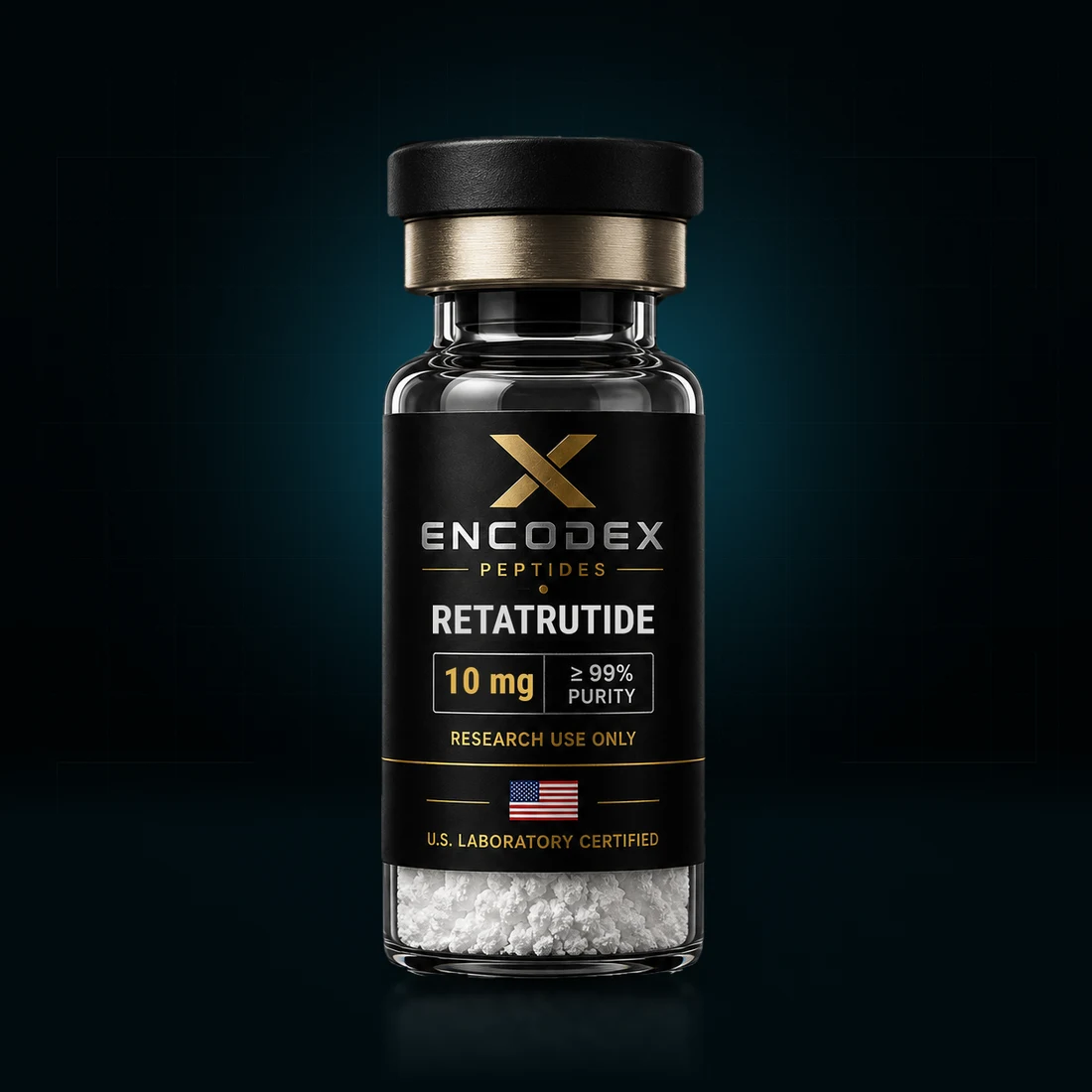
Source Retatrutide for your laboratory
Assayed at ≥99% purity, with the batch record published on the product page.