Multi-peptide blend
KLOW Blend: the research picture
Four repair-model peptides, one reconstitution.
What is KLOW Blend?
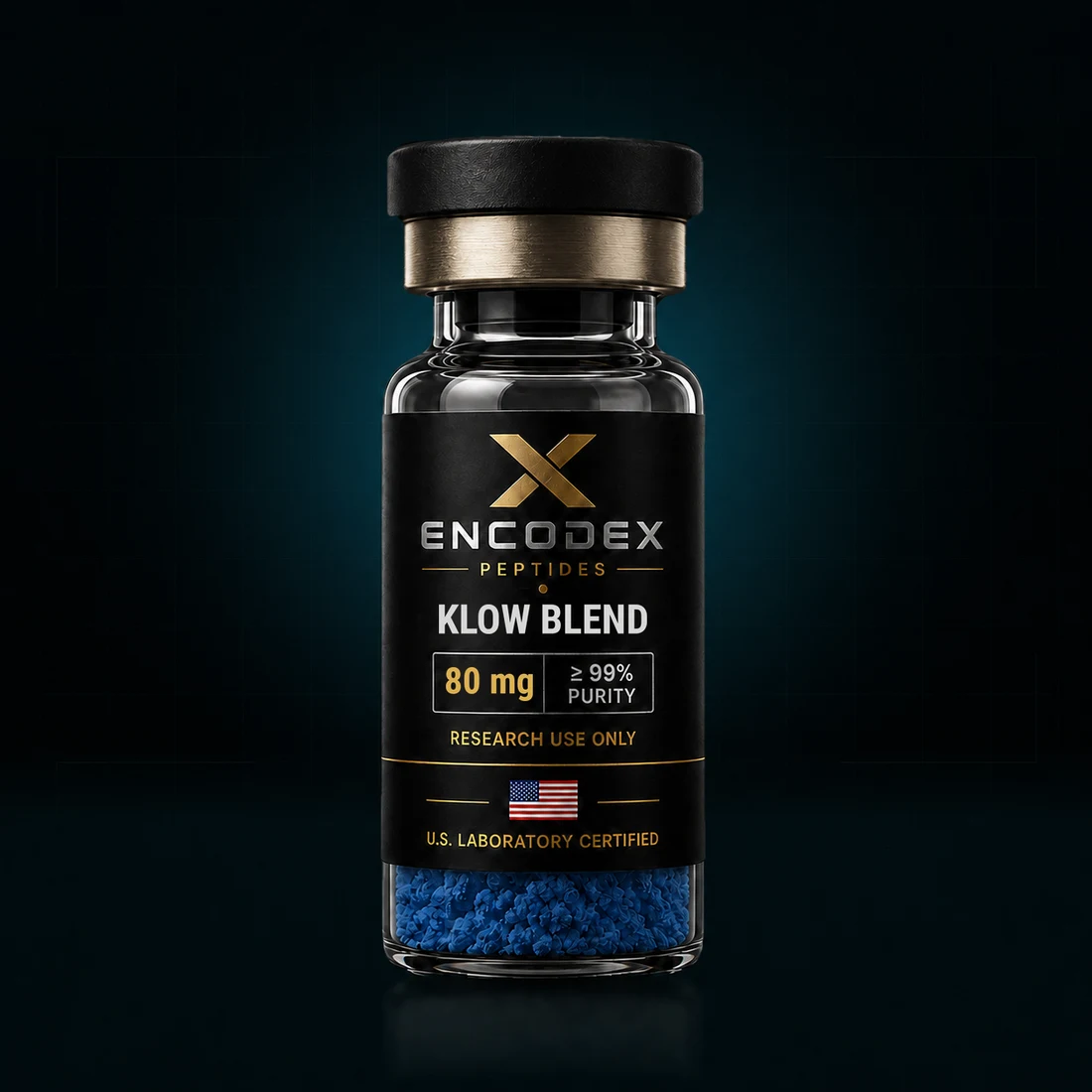
KLOW is a four-component blend supplied in a single lyophilised vial: KPV, GHK-Cu, BPC-157 and TB-500. The name is simply the initials of its components. It exists because research protocols that call for all four otherwise require four separate reconstitutions, four sets of solvent arithmetic and four opportunities for handling error.
The four were chosen because their proposed mechanisms are distinct rather than overlapping. KPV is the C-terminal tripeptide of α-melanocyte-stimulating hormone, studied for inflammatory-pathway modulation. GHK-Cu is the copper tripeptide studied in matrix remodelling. BPC-157 is associated with angiogenic signalling and growth-factor receptor modulation. TB-500 acts through actin sequestration and cell motility. Four different levers on the same class of model.
A blend is a convenience format, not a claim of synergy. The published literature covers the components individually; combined-formulation data is limited, which is itself a reason researchers work with the blend. The interaction question is open.
Each component is assayed to ≥99% purity before blending, and the vial ships with a certificate of analysis covering the lot. Research use only.
Why it's studied
One reconstitution instead of four
Fewer handling steps means fewer opportunities for contamination, dilution error and cold-chain excursion, a practical rather than pharmacological advantage, but a real one.
Non-overlapping mechanisms
Inflammatory modulation, matrix remodelling, angiogenic signalling and actin dynamics are four separate levers, which is what makes the combination interesting rather than redundant.
The interaction question is open
Component literature is substantial; combined-formulation literature is thin. That gap is precisely what makes the blend a subject of study rather than merely a product format.
Consistent ratio across a study
A pre-blended vial holds the component ratio constant between preparations, removing a source of variability that hand-mixing introduces.
Storing and reconstituting KLOW Blend
Storage before reconstitution
Lyophilised at 2–8 °C, sealed and protected from light. The GHK-Cu component makes the powder visibly blue-tinted, expected, not a defect.
Reconstitution
Bacteriostatic water, added slowly against the vial wall with gentle swirling. Avoid EDTA-containing buffers, which would chelate copper away from the GHK-Cu component.
After reconstitution
Refrigerate at 2–8 °C and protect from light. The copper component makes this blend more light-sensitive than the single peptides.
Component arithmetic
The vial total is the sum of the components, so per-component concentration depends on the blend ratio rather than the vial figure alone. Check the certificate for the per-component content of your lot.
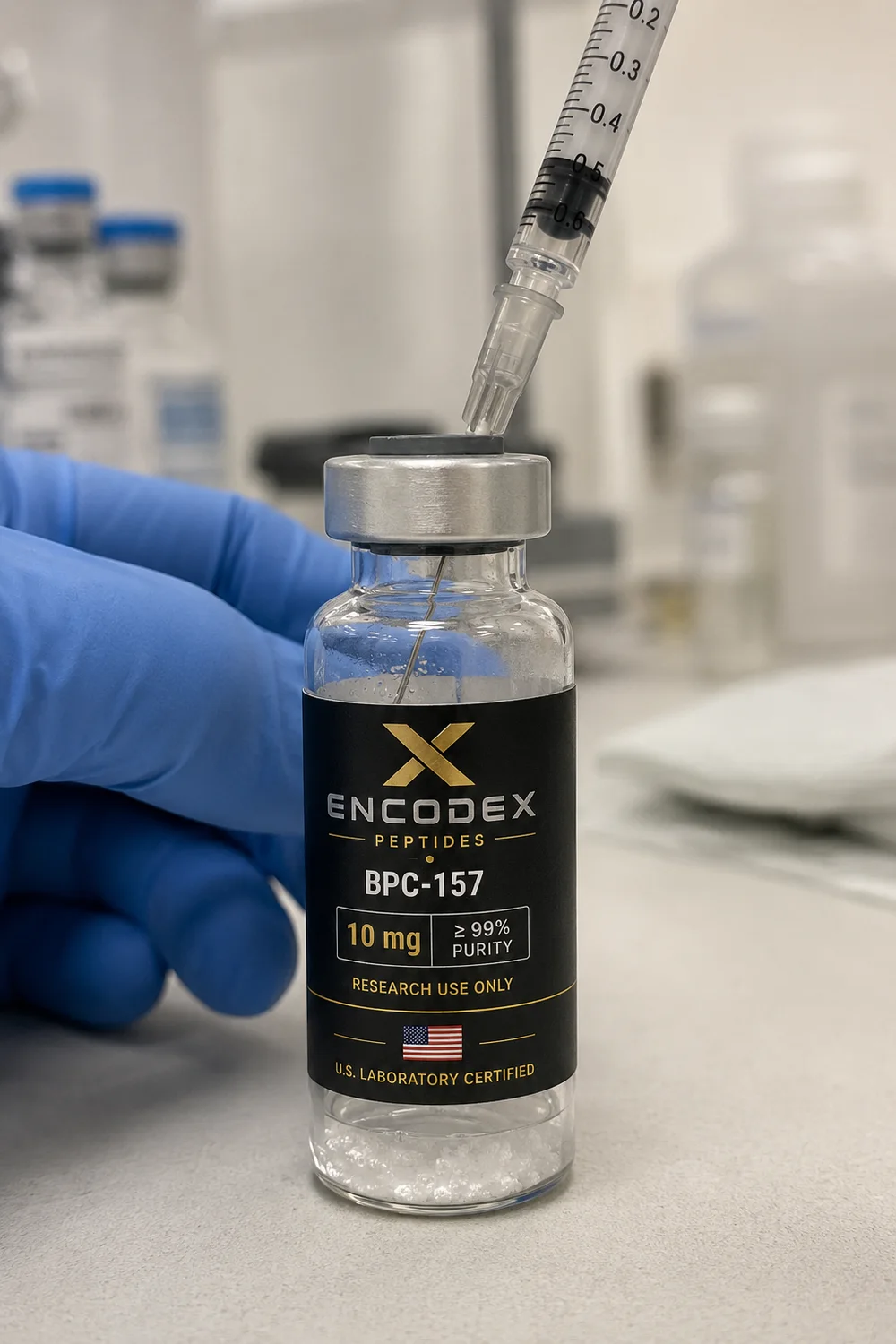
Laboratory handling guidance only. This describes standard practice for storing and preparing research reagents. It is not dosing guidance and carries no implication of human or veterinary use.
Selected published research
A starting point for the peer-reviewed literature, not a complete bibliography. Search any citation by title in PubMed or your institution's library to read the source.
- 01
Dalmasso G, et al., PepT1-mediated tripeptide KPV uptake reduces intestinal inflammation
Gastroenterology, 2008
Model-system work on the KPV component and inflammatory pathways.
- 02
Pickart L, Margolina A, Regenerative and protective actions of the GHK-Cu peptide
International Journal of Molecular Sciences, 2018
Review of the GHK-Cu component literature.
- 03
Chang CH, et al., The promoting effect of pentadecapeptide BPC 157 on tendon healing
Journal of Applied Physiology, 2011
In-vitro migration work on the BPC-157 component.
- 04
Goldstein AL, et al., Thymosin β4: actin-sequestering protein moonlights to repair injured tissues
Trends in Molecular Medicine, 2005
Overview of the mechanism behind the TB-500 component.
Citations are provided for scientific context. We are not affiliated with the authors, institutions or journals listed, and their publication implies no endorsement of this supplier or of any use of these compounds outside a laboratory.
Research questions about KLOW Blend
What is in the KLOW blend?
Four peptides in one vial: KPV, GHK-Cu, BPC-157 and TB-500. The name is the initials of the components.
What is KPV?
The C-terminal tripeptide (lysine-proline-valine) of α-melanocyte-stimulating hormone, studied for its effect on inflammatory signalling pathways in laboratory models.
Why a blend rather than separate vials?
Convenience and consistency: one reconstitution instead of four, and a fixed component ratio across every preparation in a study. We stock the components separately too if your protocol needs them independently.
Is there evidence the combination works better than the components?
The literature covers the components individually; combined-formulation data is limited. We do not claim synergy. The interaction question is genuinely open, which is part of why the blend is studied.
Why is the powder blue?
The GHK-Cu component. Copper tripeptide is deep blue and tints the whole blend. That is the correct appearance.
What purity are the components?
Each is assayed to ≥99% by HPLC and mass spectrometry before blending; the certificate covers your vial's lot.
Source KLOW Blend for your laboratory
Assayed at ≥99% purity, with the batch record published on the product page.