Pentadecapeptide (15-aa)
BPC-157: the research picture
The stable gastric pentadecapeptide, the workhorse of repair-model research.
What is BPC-157?
BPC-157 is a synthetic 15-amino-acid peptide, the sequence GEPPPGKPADDAGLV, corresponding to a partial sequence of body protection compound, a protein isolated from human gastric juice. The "stable" in its usual description, "stable gastric pentadecapeptide BPC 157", is not marketing: the fragment is notably resistant to hydrolysis in gastric acid, which is unusual for a peptide of that size and is the property that made it interesting to begin with.
It has been studied for more than three decades, largely by a single research group in Zagreb, across an unusually broad range of laboratory models: gastrointestinal, tendon, ligament, muscle, nerve and vascular. That breadth is both its scientific appeal and the reason it attracts scepticism: a compound that appears to do something in every model system is either mechanistically fundamental or methodologically over-reported, and the literature has not fully settled which.
What is well documented in cell culture is its effect on cell migration and angiogenesis. In-vitro work reports increased fibroblast and endothelial cell migration, tubule formation in endothelial assays, and modulation of growth-factor receptor expression, the cellular building blocks of tissue repair, studied in isolation.
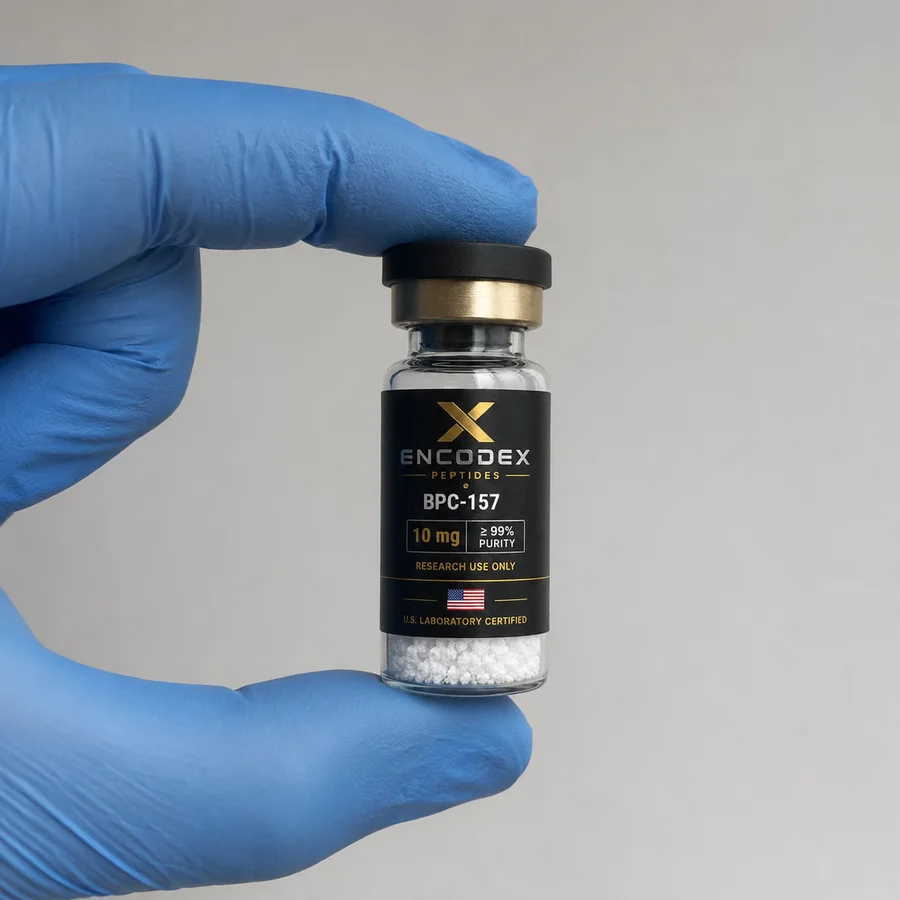
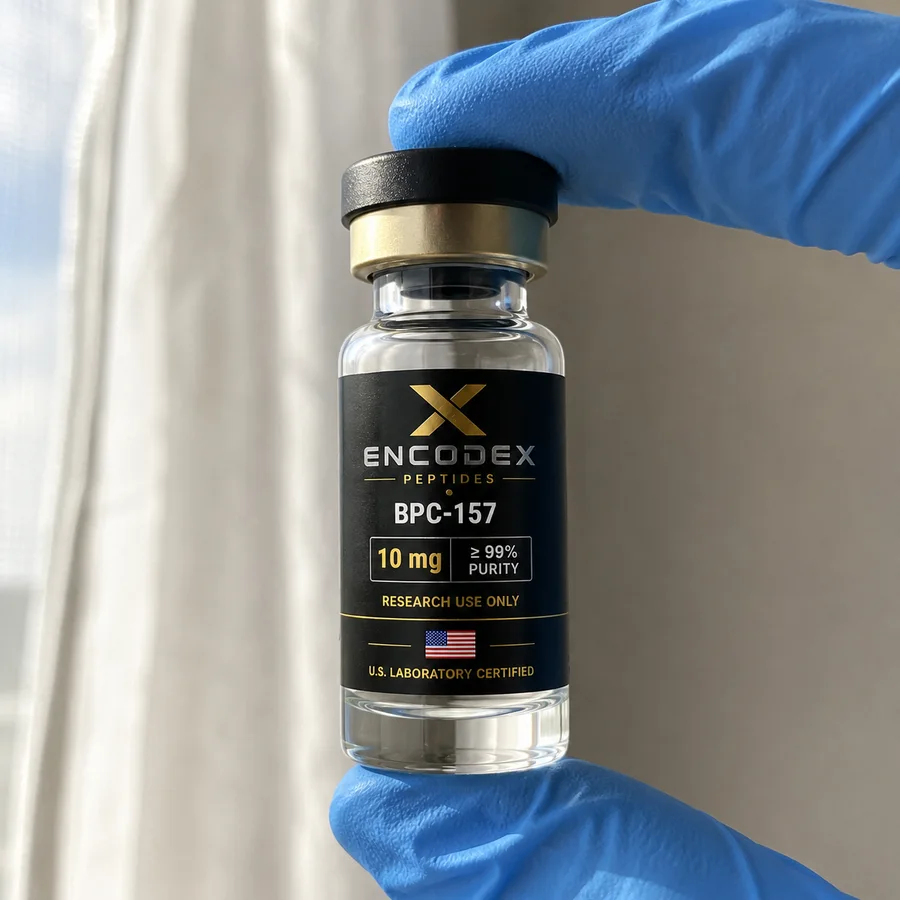
Our BPC-157 is supplied lyophilised, assayed independently by HPLC and mass spectrometry to ≥99% purity, with a per-lot certificate of analysis. It is sold as a research chemical for laboratory use only.
Why it's studied
A broad, reproducible in-vitro toolkit
Cell-migration and angiogenesis assays with BPC-157 are among the most commonly reproduced experiments in the repair-model literature, which makes it a practical positive-control style reference in that class of work.
Unusual chemical stability
Resistance to acid hydrolysis is rare in a short peptide and is a property worth studying in its own right. It is central to why this fragment, rather than the parent protein, became the studied molecule.
Angiogenesis pathway interest
Published in-vitro work examines VEGF receptor 2 expression and downstream signalling, connecting the peptide to one of the best-characterised pathways in vascular biology.
Nitric-oxide system interaction
A substantial part of the literature investigates BPC-157 in relation to the nitric-oxide system, including studies using NO-synthase inhibitors and NO donors to probe the dependency of observed effects.
How BPC-157 is understood to work
Cell migration
In-vitro studies report increased migration of fibroblasts and tendon-derived cells in scratch and transwell assays, with associated changes in F-actin organisation and focal-adhesion signalling.
Angiogenic signalling
Endothelial-cell work reports upregulation of VEGFR2 and downstream activation, with tubule formation in Matrigel-type assays, the standard in-vitro readout for angiogenic activity.
Growth-factor receptor modulation
Several papers describe altered expression of growth-factor receptors, notably in tendon-derived cell models, which is the proposed link between the peptide and observed repair-model outcomes.
Nitric-oxide interaction
Effects in a number of models are reported to be modulated by L-NAME (NOS inhibition) and L-arginine, which is taken in the literature as evidence for involvement of the NO system rather than a direct receptor of its own, no specific BPC-157 receptor has been identified.
Mechanistic descriptions summarise published laboratory research. They describe what the literature investigates, not effects in humans, and not guidance of any kind.
Storing and reconstituting BPC-157
Storage before reconstitution
Lyophilised at 2–8 °C, sealed, protected from light. The dry peptide is stable enough to tolerate normal shipping excursions in insulated packaging.
Reconstitution
Bacteriostatic water is the standard solvent for repeated-withdrawal laboratory work. Add slowly against the vial wall and dissolve with gentle swirling rather than shaking.
After reconstitution
Refrigerate at 2–8 °C and protect from light. Short peptides in solution degrade faster than in the lyophilised state, so reconstituted material is generally prepared in quantities matched to the experiment rather than stored long term.
Blend context
BPC-157 also appears as one component of our KLOW blend alongside KPV, GHK-Cu and TB-500, useful when a protocol calls for the combination in a single vial rather than four separate reconstitutions.
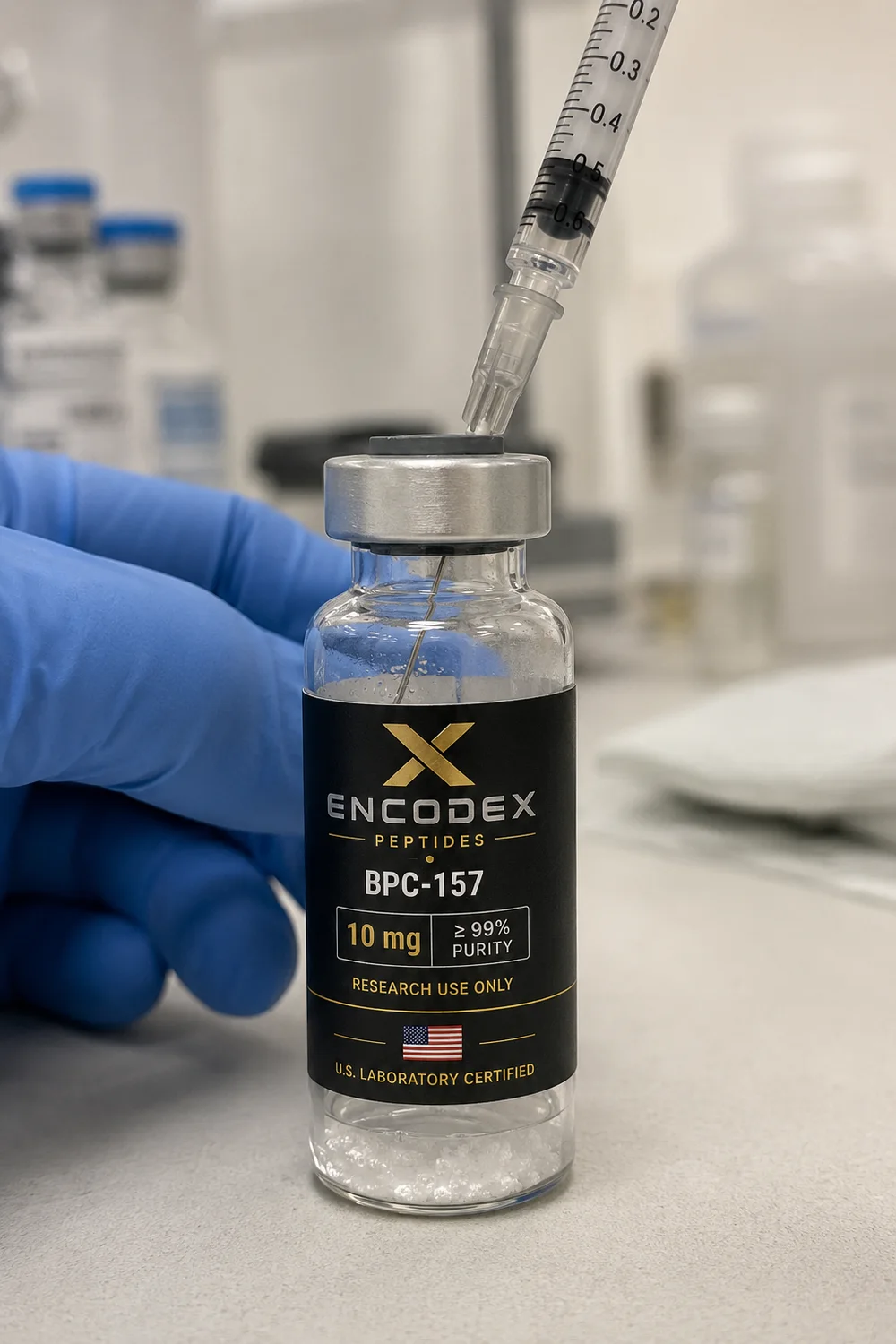
Laboratory handling guidance only. This describes standard practice for storing and preparing research reagents. It is not dosing guidance and carries no implication of human or veterinary use.
The BPC-157 molecule
Identifiers cross-checked against reference databases before publication. Where a value could not be verified from two independent sources, it is left out rather than estimated.
- G 1 · Glycine
- E 2 · Glutamic acid
- P 3 · Proline
- P 4 · Proline
- P 5 · Proline
- G 6 · Glycine
- K 7 · Lysine
- P 8 · Proline
- A 9 · Alanine
- D 10 · Aspartic acid
- D 11 · Aspartic acid
- A 12 · Alanine
- G 13 · Glycine
- L 14 · Leucine
- V 15 · Valine
Sequence notes
Unmodified: free N-terminus, free C-terminal acid, all fifteen residues standard L-amino acids.
Identifiers
- CAS number
- 137525-51-0
- Molecular formula
- C62H98N16O22
- Molecular weight
- 1419.5 g/mol
- Amino acid count
- 15
- Also known as
- Body Protection Compound 157 · PL 14736
Sources: PubChem, DrugBank, ChEBI, UniProt and regulatory product labels.
How BPC-157 compares
The class comparison has its own article, written to be read on its own.
Selected published research
A starting point for the peer-reviewed literature, not a complete bibliography. Search any citation by title in PubMed or your institution's library to read the source.
- 01
Sikiric P, et al., Stable gastric pentadecapeptide BPC 157: novel therapy in gastrointestinal tract
Current Pharmaceutical Design, 2011
A review from the principal research group summarising the gastrointestinal model literature.
- 02
Chang CH, et al., The promoting effect of pentadecapeptide BPC 157 on tendon healing involves tendon outgrowth, cell survival and cell migration
Journal of Applied Physiology, 2011
Tendon-derived cell work: one of the most-cited in-vitro migration studies on the peptide.
- 03
Huang T, et al., Body protective compound-157 enhances alkali-burn wound healing and promotes proliferation, migration and angiogenesis in vitro
Drug Design, Development and Therapy, 2015
Combined in-vitro and model work on the angiogenic and migration readouts.
- 04
Hsieh MJ, et al., Therapeutic potential of pro-angiogenic BPC157, the VEGFR2 signalling pathway
Journal of Molecular Medicine, 2017
Examines the VEGFR2 pathway as a proposed route for the reported angiogenic activity.
Citations are provided for scientific context. We are not affiliated with the authors, institutions or journals listed, and their publication implies no endorsement of this supplier or of any use of these compounds outside a laboratory.
Research questions about BPC-157
What is BPC-157?
A synthetic 15-amino-acid peptide corresponding to a fragment of body protection compound, a protein found in gastric juice. It is studied in tissue-repair, cell-migration and angiogenesis models, and is supplied here for laboratory research use only.
What does BPC stand for?
Body protection compound: the gastric protein from which the studied 15-amino-acid sequence is derived.
Does BPC-157 have a known receptor?
No specific receptor has been identified. The literature generally frames its activity through interaction with the nitric-oxide system and modulation of growth-factor receptor expression rather than direct agonism at a dedicated receptor.
How is BPC-157 different from TB-500?
Both are studied in repair models, but through different mechanisms: BPC-157 is associated with angiogenic signalling and growth-factor receptor modulation, while TB-500 derives from thymosin β4 and is studied primarily for actin sequestration and its effect on cell motility.
What purity is your BPC-157?
Independently assayed by HPLC and mass spectrometry and released at ≥99%. The certificate of analysis matches the lot number on your vial.
How stable is it?
Unusually stable for a short peptide, resistance to gastric acid hydrolysis is the property it is named for. In the lyophilised state at 2–8 °C it holds well; in solution, like all short peptides, it degrades faster.
Is BPC-157 approved for human use?
No. It is not an approved medicine anywhere and we supply it strictly for laboratory research, not for human or veterinary use.
Can I get the COA before ordering?
Yes. Message us and we will send the current lot certificate.
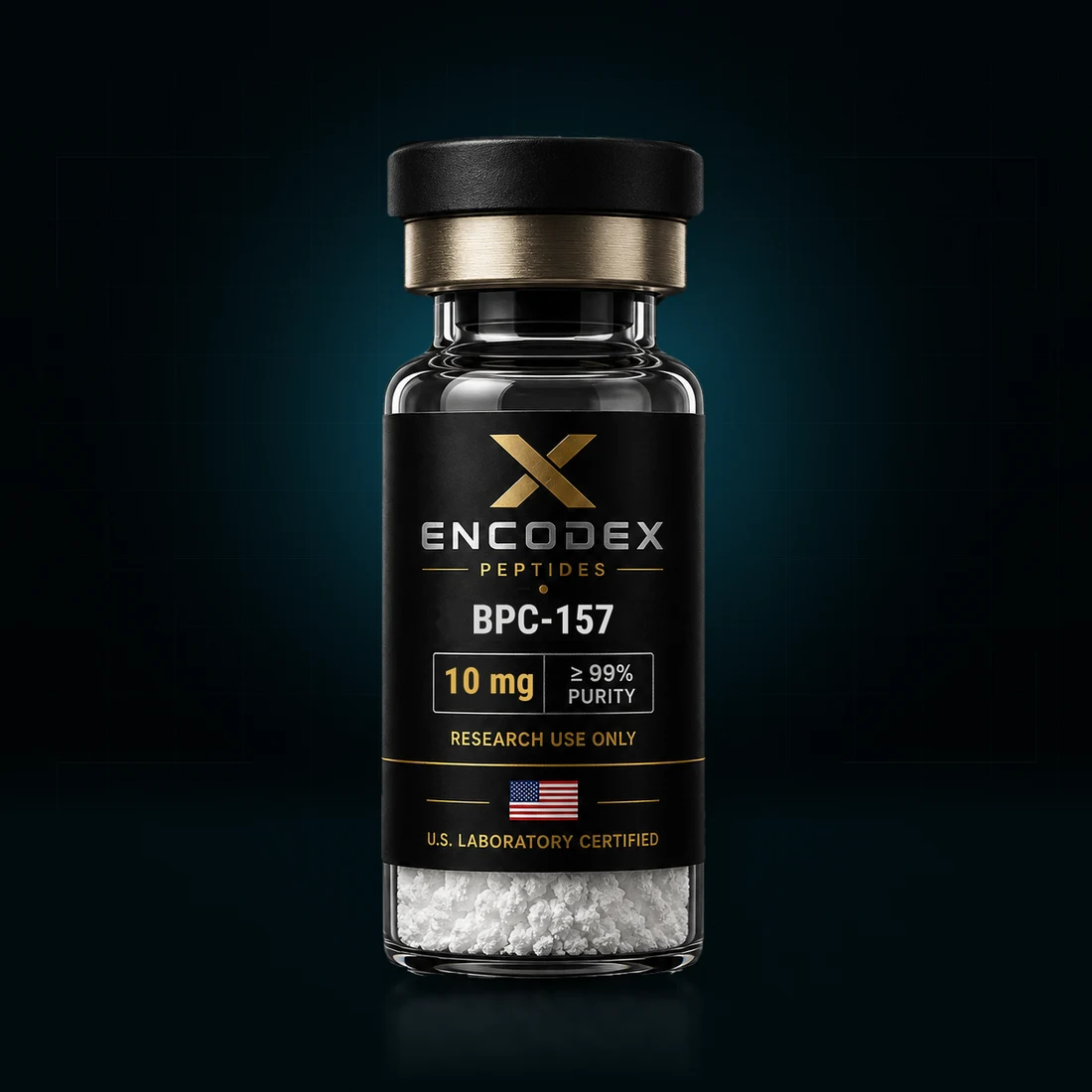
Source BPC-157 for your laboratory
Assayed at ≥99% purity, with the batch record published on the product page.