Reconstitution solvent
Bacteriostatic Water: the research picture
The solvent that lets a vial survive more than one withdrawal.
What is Bacteriostatic Water?
Bacteriostatic water is sterile water containing 0.9% benzyl alcohol as a preservative. The benzyl alcohol is what distinguishes it from plain sterile water for injection: it inhibits bacterial growth, which means a vial can be entered repeatedly over a period of time rather than being discarded after the first withdrawal.
For peptide work that distinction is practical rather than academic. A 10 mg peptide vial used across a study is entered many times; with a non-preserved solvent, every entry is a contamination opportunity and the reconstituted material has to be treated as single-use. Bacteriostatic water is the standard solvent in published peptide-handling protocols for exactly this reason.
"Bacteriostatic" means growth-inhibiting, not sterilising. It suppresses proliferation of organisms introduced during handling; it does not decontaminate a solution that is already compromised, and it does not remove the need for aseptic technique.
Supplied for laboratory research use only, alongside the peptides it is intended to reconstitute.
Why it's studied
Multi-draw capability
The preservative is what makes a multi-withdrawal vial viable, the single most practical consideration in peptide study design, since it determines whether a vial is one experiment or twenty.
The published standard
Peptide handling protocols in the literature specify bacteriostatic water as the default reconstitution solvent, so using it keeps laboratory work comparable with published method sections.
Gentle on peptides
Benzyl alcohol at 0.9% is compatible with the peptide classes in this catalogue, which is why it became the convention rather than a harsher preservative.
Storing and reconstituting Bacteriostatic Water
Storage
Room temperature is acceptable for the sealed vial; keep it out of direct light. Refrigeration is unnecessary before use.
Technique
Swab the stopper before every entry. Add the water slowly down the inside wall of the peptide vial rather than directly onto the lyophilised cake, then dissolve by gentle swirling, never shaking.
After first entry
Standard laboratory practice treats an entered bacteriostatic vial as usable for a limited period under refrigeration. Date the vial at first entry so that window is tracked rather than guessed.
What it is not
It is not a sterilising agent and not a substitute for aseptic technique. It also should not be used where a protocol specifically requires preservative-free solvent. Some assays are sensitive to benzyl alcohol.
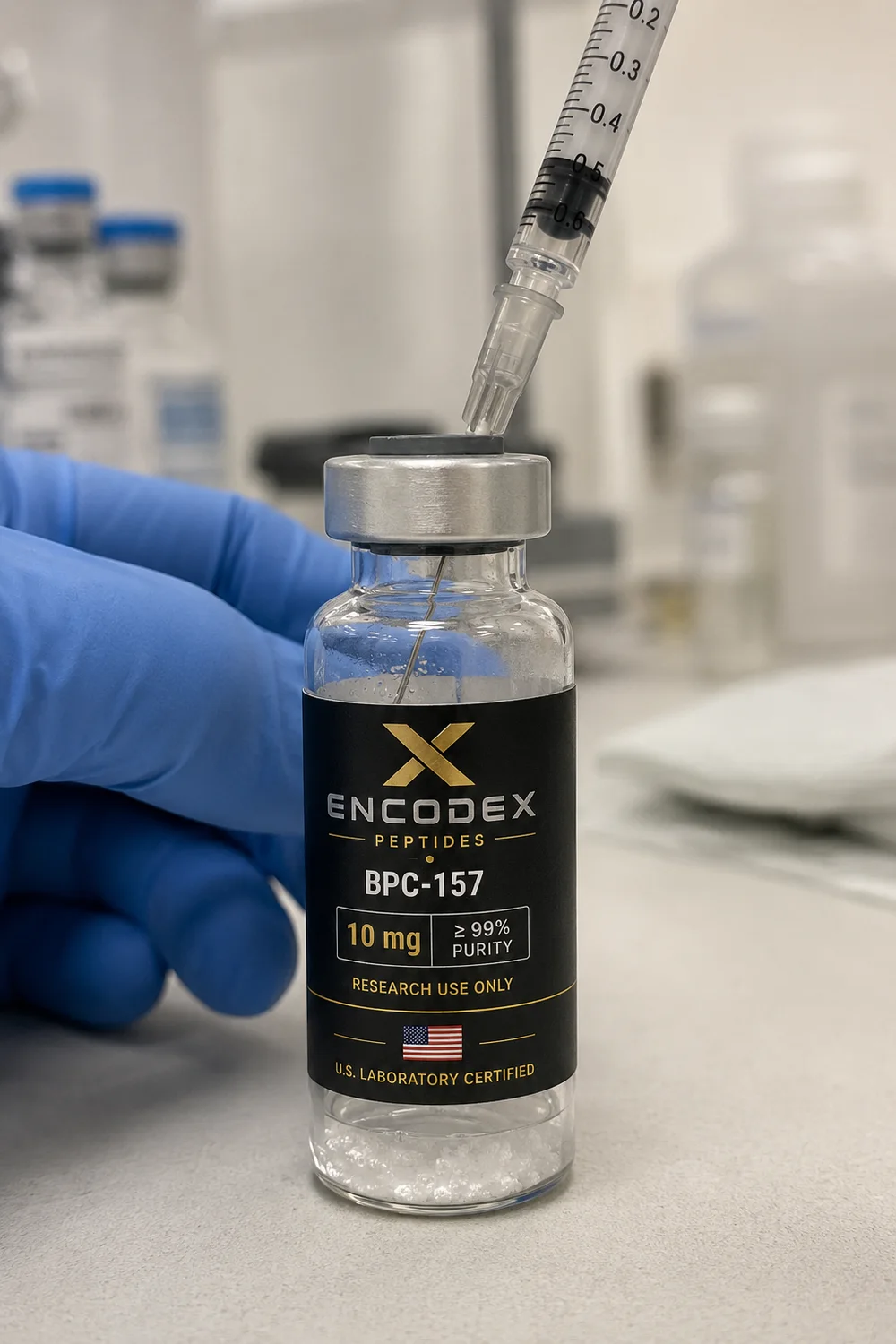
Laboratory handling guidance only. This describes standard practice for storing and preparing research reagents. It is not dosing guidance and carries no implication of human or veterinary use.
The Bacteriostatic Water molecule
Identifiers cross-checked against reference databases before publication. Where a value could not be verified from two independent sources, it is left out rather than estimated.
- Water for injection H₂O
- CAS 7732-18-5 · Vehicle
- Benzyl alcohol C₇H₈O
- CAS 100-51-6 · Bacteriostatic preservative
Identifiers
- Also known as
- Bacteriostatic Water for Injection · BWFI
Sources: PubChem, DrugBank, ChEBI, UniProt and regulatory product labels.
Research questions about Bacteriostatic Water
What is bacteriostatic water?
Sterile water containing 0.9% benzyl alcohol as a bacteriostatic preservative, used to reconstitute lyophilised peptides for laboratory work.
How is it different from sterile water?
Sterile water has no preservative, so a vial is effectively single-use. The benzyl alcohol in bacteriostatic water inhibits bacterial growth, which is what allows repeated withdrawals from the same vial.
Does bacteriostatic mean sterile?
No. Bacteriostatic means growth-inhibiting. It suppresses proliferation of organisms introduced during handling; it does not sterilise a contaminated solution, and aseptic technique is still required.
How much do I need per vial?
That depends on the working concentration your protocol calls for, content divided by volume. The dilution calculator on this site works it out, including the per-graduation figure for laboratory syringes.
Does it need refrigeration?
Not before use. Store the sealed vial at room temperature away from direct light. Reconstituted peptide solutions, by contrast, do need refrigeration.
Can it be used with every peptide?
It is compatible with the peptide classes we stock. Some specialised assays require preservative-free solvent, check your protocol before defaulting to it.
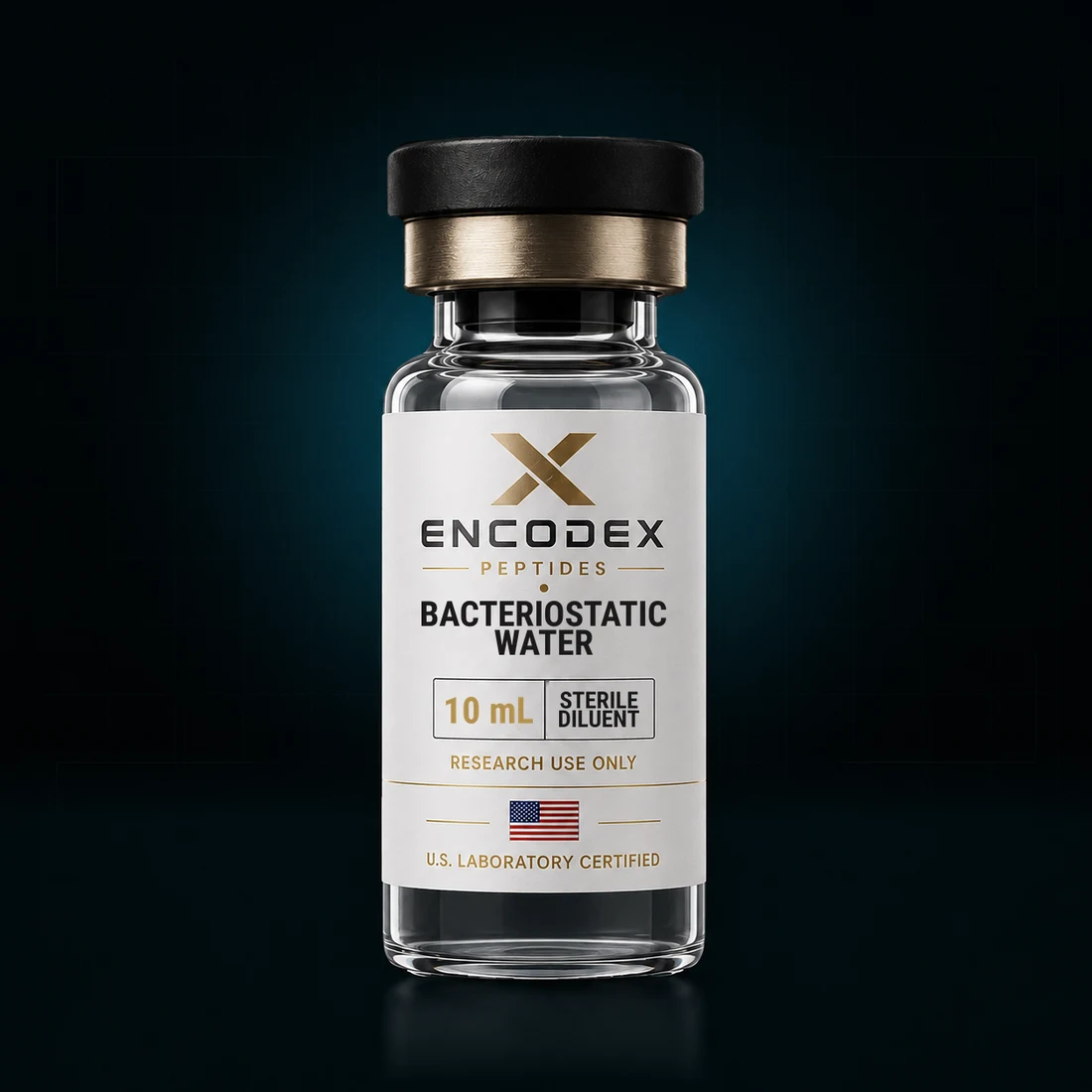
Source Bacteriostatic Water for your laboratory
Assayed at ≥99% purity, with the batch record published on the product page.